
CYBERSECURITY / AI / EVIDENCE
AISeeRisk
A security audit platform combining an authorised scope, reliable evidence, risk prioritisation and controlled remediation with subsequent verification.
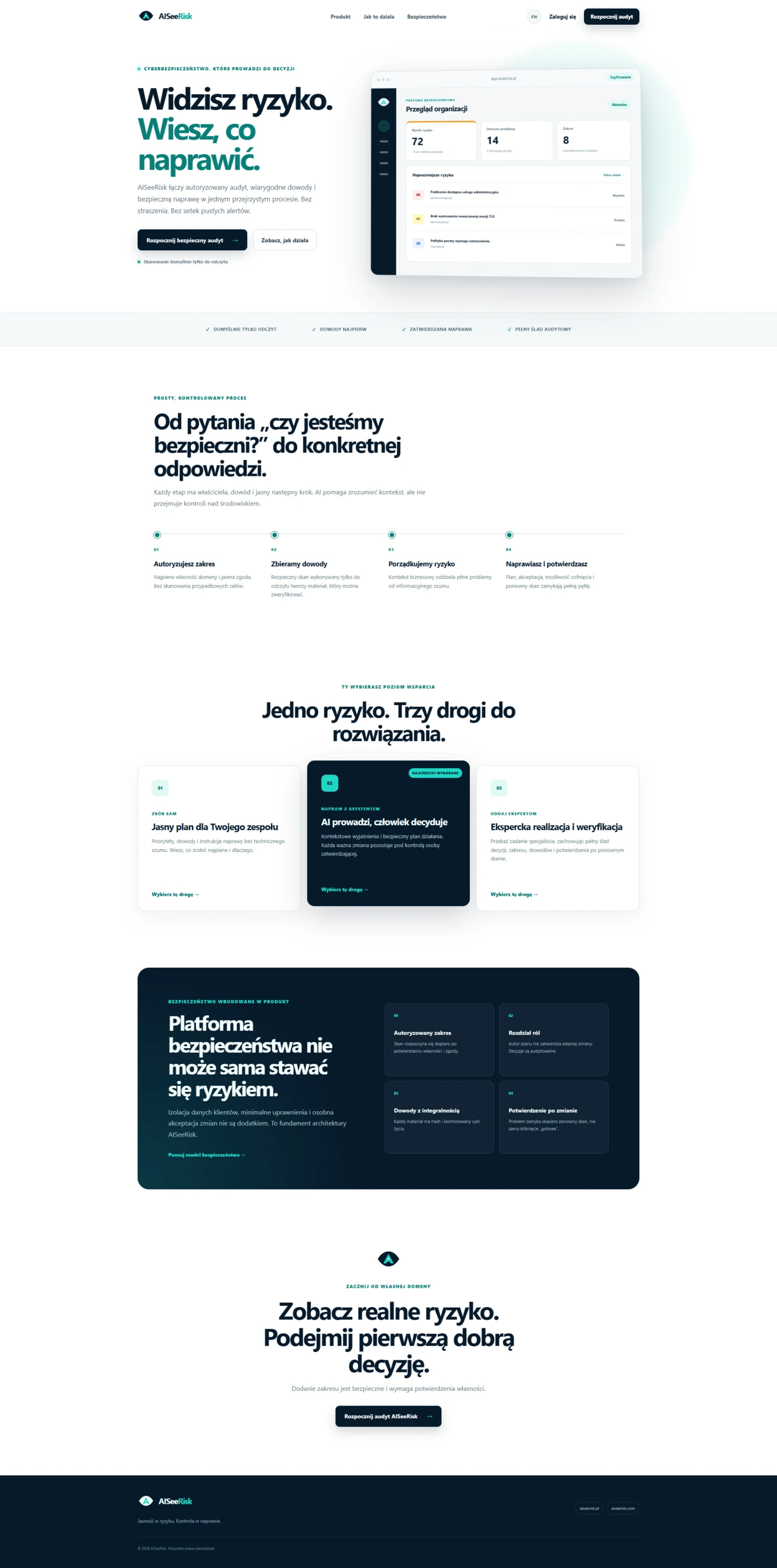
- Product
- Security platform
- Model
- Audit + remediation
- Focus
- Evidence + risk
THE CHALLENGE
From hundreds of alerts to decisions, evidence and a verified fix.
A conventional security scan often ends with a long list of warnings, without a clear answer about what is genuinely urgent, who should make the decision and how to confirm that a change works. The product was intended to organise the whole cycle, rather than just detect issues.
An audit must be authorised and safe for the environment under review. Its scope should be confirmed, scanning should be read-only by default, and every finding should have supporting evidence that can be independently verified.
Remediation cannot be uncontrolled automation. AI can organise context and prepare a plan, but significant changes require approval, the ability to roll back and a subsequent scan that closes the audit loop.
Build a platform that guides an organisation from an authorised scope and evidence, through risk assessment, to controlled remediation and verification of the outcome.
SCOPE AND DECISIONS
What was designed, and why.
The functional scope is presented alongside decisions that affect everyday use and future product development.
- 01
Domain ownership verification, scope authorisation and control of the resources being assessed.
- 02
Safe read-only scans and collection of evidence with integrity protection.
- 03
Scoring, prioritisation and business context that separate meaningful risks from noise.
- 04
Remediation plans, change approval, rollback and subsequent verification.
- 05
Customer data isolation, separation of roles, an audit trail and different levels of implementation support.
Read-only by default
The first audit stage does not change the environment. Scope and ownership are confirmed before scanning starts.
Evidence before alerts
Each risk is linked to verifiable material, rather than basing decisions solely on a scanner label.
AI advises, a person approves
Automation organises context and the action plan, while decisions about significant changes remain with an authorised person.
A closed remediation loop
An issue is not closed simply because a task is marked complete. A subsequent scan must confirm that the risk has actually been removed.
ARCHITECTURE
Product layers and their responsibilities.
The architecture is described in functional terms to make clear where logic, data, integrations and operations belong.
- 01
Onboarding and authorisation → verification of the domain, owner and audit scope.
- 02
Audit engine → controlled read-only tests and connectors with minimum privileges.
- 03
Evidence layer → artefacts, integrity, hashes and the full evidence lifecycle.
- 04
Risk engine → scoring, business context, priorities and remediation recommendations.
- 05
Remediation workflow → roles, approvals, execution, rollback, rescanning and decision auditing.
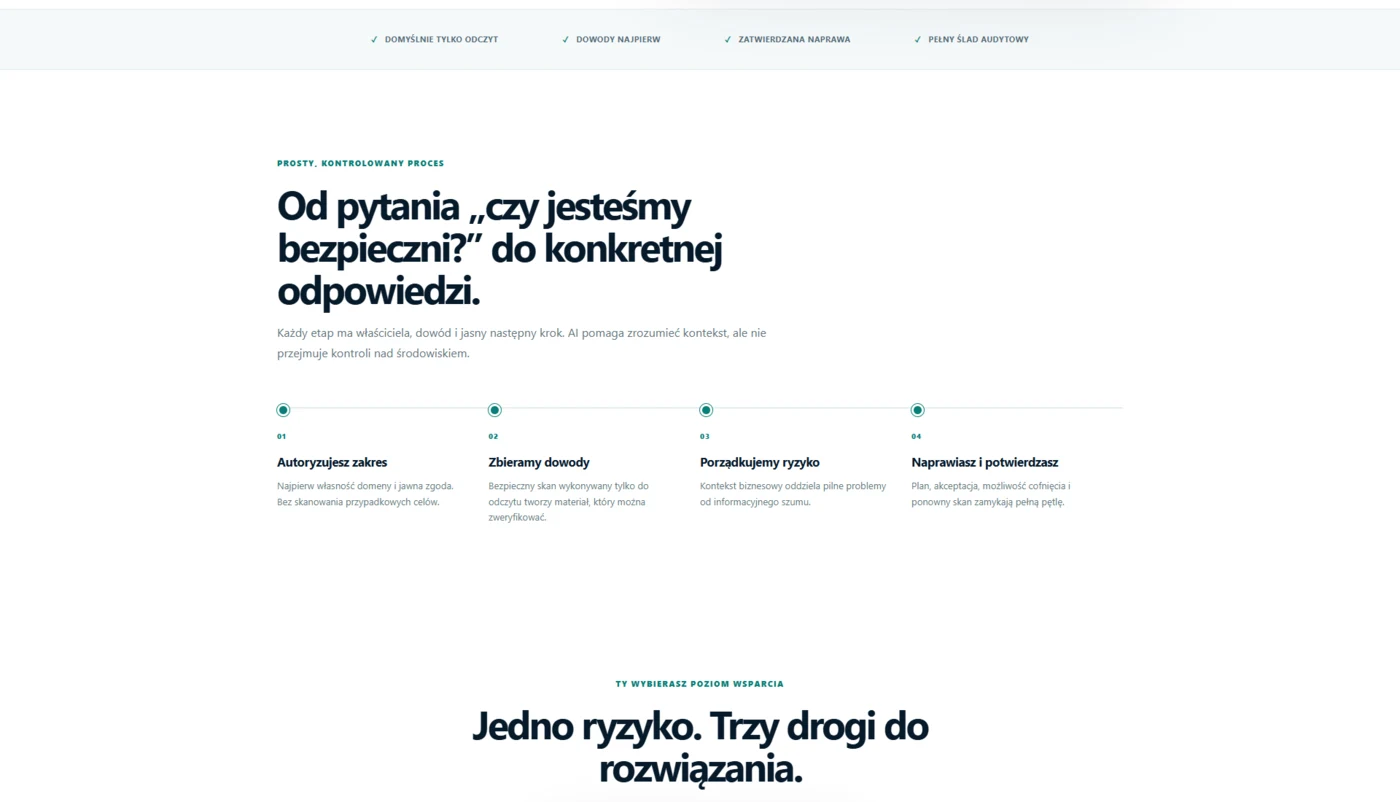
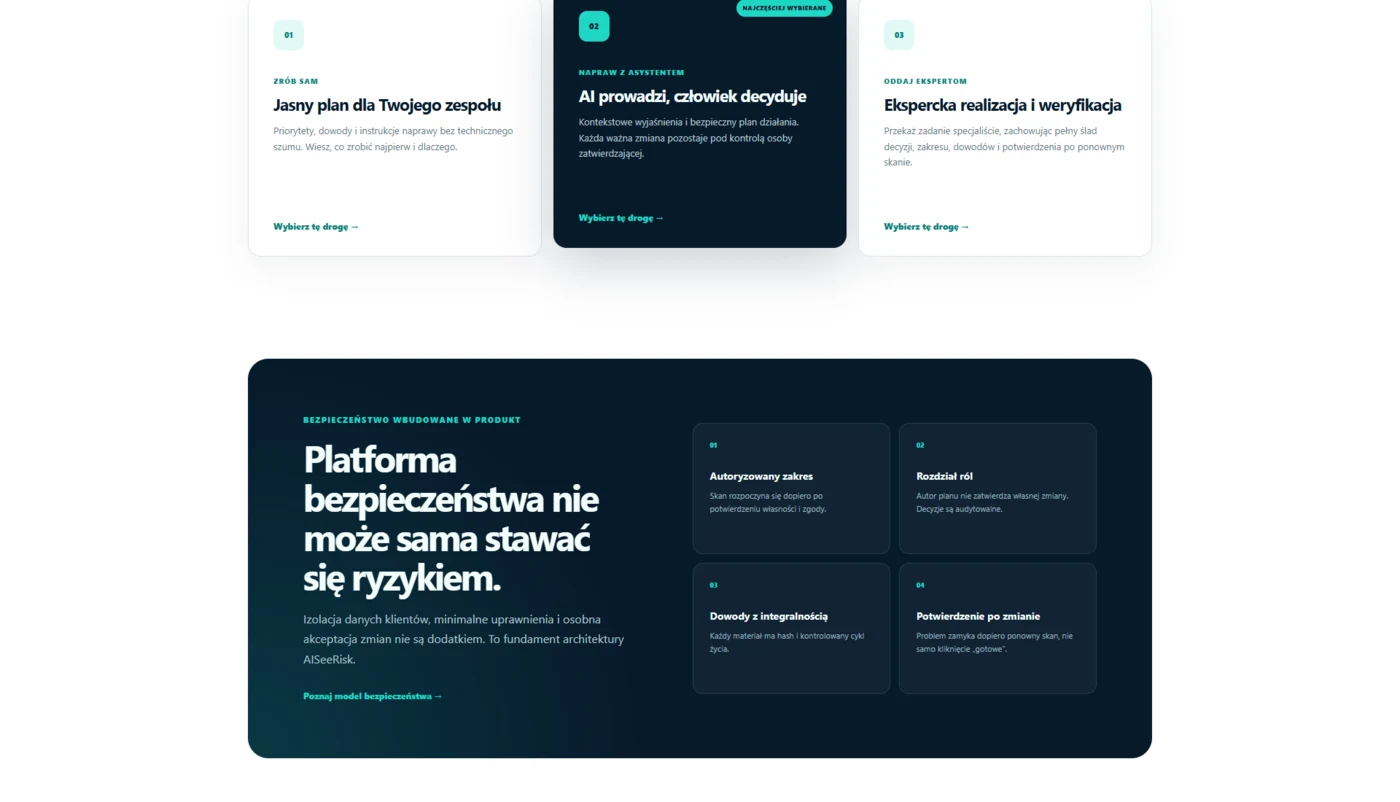
SELECTED SCREENS
The interface as part of the whole process.
The screenshots show the appearance and how users are guided through the main tasks.
OUTCOME
What the project delivered.
Specific product, process and deployment capabilities delivered by the project, without invented metrics.
- One controlled path from scope authorisation to verified risk closure.
- Less noise through combining technical findings with evidence and business context.
- Three delivery models: a plan for the team, AI assistance, or expert remediation and verification.
- Auditable decisions, roles, evidence integrity and the ability to reconstruct the sequence of changes.
- Security built into the product through minimum privileges, isolation and rescanning.
NEXT PROJECT
Eventnado
A two-sided event platform combining a catalogue and search for attendees with planning, administrative requirements, registration and event operations for organisers.