PBX and routing architecture
Tenants, SIP profiles, gateways, call rules, IVR, queues, recordings, failover and integrations with applications and carriers.

TELEPHONY / REAL-TIME COMMUNICATION
I design and stabilise VoIP environments, from SIP and routing to RTP, WebRTC, provisioning and carrier integrations. Every decision should be visible in the logs, measurable and reproducible.
APPROACH
Business telephony rarely stops at PBX configuration. A call is affected by endpoints, NAT, ACLs, SIP profiles, the dialplan, the carrier, codecs, media, applications and each customer's policies.
I combine signalling and RTP analysis with practical knowledge of FreeSWITCH, FusionPBX, OpenSIPS, WebRTC and SIP devices. This allows a problem to be traced from the first INVITE to the end of the session, without passing it from one team to another.
For migrations, I prepare the scope, feature mapping, test scenarios, cutover plan and rollback. For incidents, I provide the root cause, a fix and preventive actions, rather than just a temporary workaround.
AREAS OF EXPERTISE
The scope follows your goal and the current state of the environment. We can start with a single issue or a complete project.
Tenants, SIP profiles, gateways, call rules, IVR, queues, recordings, failover and integrations with applications and carriers.
Analysis of call flows, headers, SDP, codecs, NAT, retransmissions, packet loss, T.38, one-way audio and device behaviour.
WSS, ICE, STUN/TURN, DTLS-SRTP, RTP ranges, media relays and browser and infrastructure diagnostics.
Inventory, feature mapping, pre-production tests, controlled cutovers, DNS/ENI failover and recovery procedures.
WHAT YOU RECEIVE
A deployment should be verifiable, maintainable and safe to develop further.
Architecture and call-flow design, including integration points.
Configuration of the PBX environment, routing, trunks, profiles and call policies.
Test scenarios for calls, media, user features and failover.
Analysis of packet captures, logs and recordings with a clear explanation of the cause.
Deployment and rollback plans, with operational documentation for maintenance.
HOW I WORK
I identify all parties in the call, NAT points, profiles, trunks and dependencies.
I collect SIP, RTP, logs, configuration and samples of successful and failed calls.
I make a change within a controlled scope and test edge cases.
I document the RCA, monitoring, procedures and safeguards against regression.
WHEN IT HELPS
You do not need a finished specification. A specific problem, risk or desired outcome is enough.
RELATED WORK
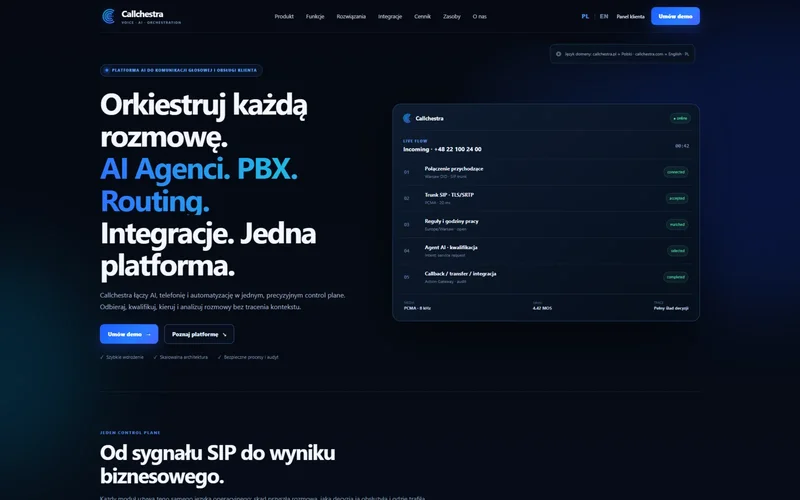
AI / VOIP / COMMUNICATION PLATFORM
A business communication orchestration platform combining AI agents, PBX, routing, workflows, call analytics and integrations in one controlled environment.
Read the case study →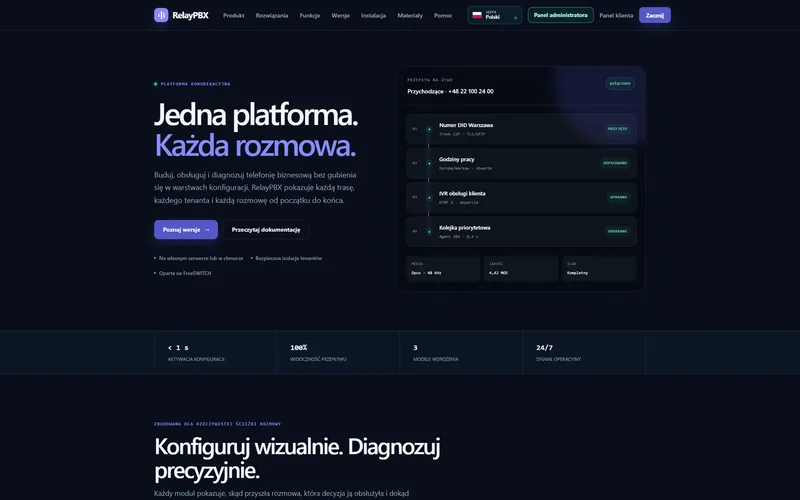
VOIP / COMMUNICATION PLATFORM
A platform for building and operating business telephony, combining visual configuration, routing, tenants, SIP diagnostics and different deployment models.
Read the case study →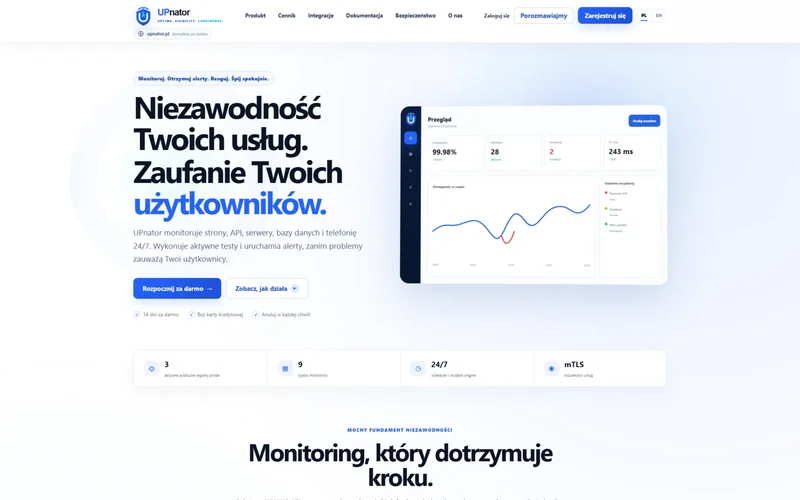
MONITORING / OBSERVABILITY
A monitoring and reliability platform for websites, APIs, servers, databases and telephony, with alerts, status pages, incident history and SLO reports.
Read the case study →FAQ
Yes. We can start with configuration, logs and call samples. Recommendations are separated into urgent fixes, stabilisation measures and optional modernisation.
Yes. The analysis can cover SIP, SDP, RTP, ICE, STUN/TURN, WSS, DTLS-SRTP, codecs, and browser and endpoint behaviour.
Yes. The plan covers inventory, feature mapping, a test environment, the order of tenant migrations, post-cutover validation and a rollback procedure.
Usually, the exact event time, Call-ID, successful and failed samples, a signalling packet capture and — where possible — RTP, platform logs and the relevant configuration excerpt are enough to begin.
NEXT STEP
Let's start with the evidence: event time, Call-ID, logs and a packet capture. We will identify the path, the failure point and the safest way to fix it.